Refrigerant Inc
Buy R123 Refrigerant | Low-Pressure Centrifugal Chillers | 100 & 200 lb Drum — Refrigerant Inc
Buy R123 Refrigerant | Low-Pressure Centrifugal Chillers | 100 & 200 lb Drum — Refrigerant Inc
Couldn't load pickup availability
R123 Refrigerant (HCFC-123) — Low-Pressure Centrifugal Chillers & R11 Retrofits
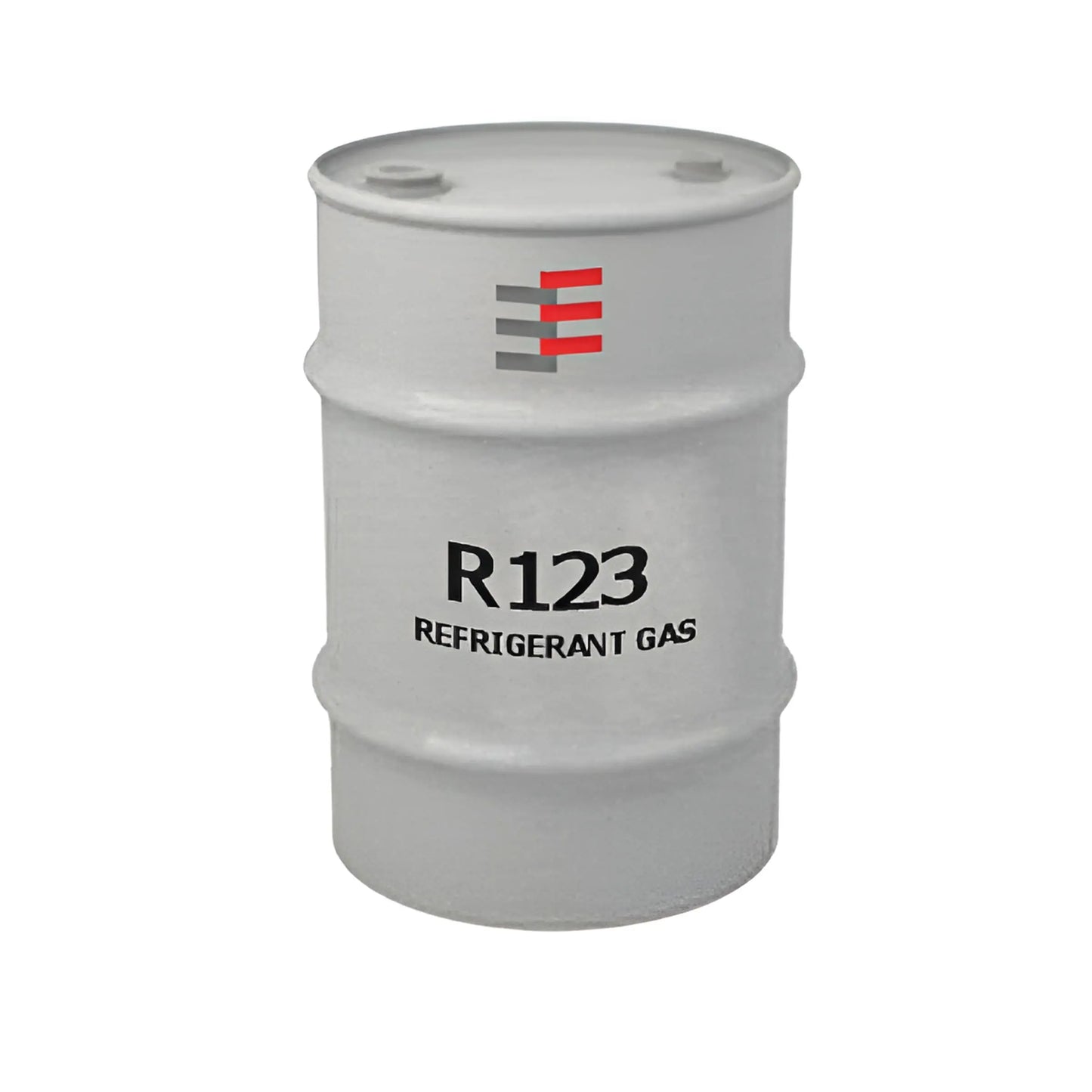
R-123 (HCFC-123, dichlorotrifluoroethane) is the HCFC refrigerant used in low-pressure centrifugal chiller plants — both in new equipment manufactured to use R123 and in older centrifugal chillers retrofitted from R11. It is the refrigerant of choice for large central cooling systems in commercial buildings, hospitals, universities, data centers, and industrial facilities running Carrier 19XR, Trane CVHE/CVHF, York YK, and similar low-pressure centrifugal chiller platforms. Refrigerant Inc stocks R123 in 100 lb and 200 lb drums with free shipping to all 48 continental states.
What Equipment Uses R123?
R123 is used exclusively in low-pressure centrifugal chiller equipment designed or retrofitted for HCFC-123:
- New low-pressure centrifugal chillers — Equipment manufactured from the early 1990s through approximately 2024 by Carrier, Trane, York, McQuay/Daikin, and others designed to use R123
- Retrofitted R11 chillers — Older centrifugal chiller plants converted from R11 to R123 following the CFC phaseout
- Large commercial cooling plants — Central chilled water systems in office buildings, hospitals, universities, government facilities, and industrial plants
- Data center cooling — Large-tonnage chiller plants providing precision cooling for data centers and server facilities
R123 operates at sub-atmospheric pressures on the evaporator side (like R11) and requires centrifugal compressors specifically designed for low-pressure operation. It cannot be used in any standard residential or light commercial HVAC equipment. Always verify the equipment nameplate or service log specifies R-123 or HCFC-123 before ordering.
R123 Phaseout — Current Status
R123 is an HCFC with an ozone depletion potential of 0.012 (much lower than R11's 1.0, but non-zero). Under the EPA AIM Act and Montreal Protocol HCFC phasedown schedule, R123 production for new equipment has been phased out. However, R123 refrigerant remains fully legal to purchase and use for servicing existing equipment — and the installed base of R123 centrifugal chillers is massive, representing billions of dollars of equipment that will continue operating and requiring service for many years.
Key points for facilities managers and chiller plant operators:
- R123 for service use remains available and legal
- Supply will become progressively more constrained and expensive as HCFC phasedown advances — similar to what happened with R22
- Stocking strategic reserves of R123 is worth considering for facilities with large or multiple R123 chiller plants
- EPA Section 608 certification is required for purchase
R123 vs. R1233zd — The Next-Generation Replacement
As R123 equipment ages and new low-pressure centrifugal chillers are specified, R1233zd(E) (sold as Solstice zd by Honeywell and Opteon zd by Chemours) is the emerging lower-GWP, non-ozone-depleting replacement for R123 in new equipment. However, R1233zd is not a drop-in replacement for R123 in existing equipment — system modifications are required. For servicing existing R123 chillers, R123 is the correct refrigerant.
R123 vs. R11 — Key Differences
- R11 (CFC-11) — The original low-pressure centrifugal chiller refrigerant; banned CFC; very high ozone depletion potential; only available as reclaimed product in extremely limited supply
- R123 (HCFC-123) — The replacement for R11; much lower ozone depletion potential; used in both retrofitted R11 chillers and new low-pressure centrifugal equipment; available as virgin product
If your chiller originally used R11 and has been retrofitted, it now uses R123. Check the equipment service log or nameplate to confirm. If you need R11 for an unconverted system, see our R11 page here.
Why Buy R123 From Refrigerant Inc
- Virgin Product Available — Unlike R11, virgin R123 is still available. We stock factory-sealed, certified product.
- Free Shipping to All 48 States — No freight fees added at checkout.
- Same or Next-Day Processing — Orders placed before 2PM EST ship the same day.
- Bulk & Facility Pricing — For facilities managing large chiller plants or multiple buildings, call 888-593-7366 for volume pricing.
Shipping Information
R123 ships in 100 lb and 200 lb drums via ground freight to all 48 continental states. Alaska and Hawaii excluded. Most orders ship within 1 business day. Transit time is typically 2–5 business days depending on location. Given the drum size and weight, liftgate service may be required for delivery — contact us if your facility does not have a loading dock.
Frequently Asked Questions
Is R123 still available?
Yes. R123 for servicing existing equipment remains fully legal to purchase and use. While new equipment production using R123 has been phased out, service supply continues. Call us to confirm current availability for large quantity orders.
What is the difference between R123 and R11?
R11 is the original CFC refrigerant used in older centrifugal chillers — banned due to its high ozone depletion potential and only available as scarce reclaimed product. R123 is its HCFC replacement, with much lower ozone impact, used in both retrofitted R11 chillers and newer low-pressure centrifugal equipment. They are not interchangeable.
Can R123 be used in residential or commercial HVAC equipment?
No. R123 operates at sub-atmospheric pressures and is designed exclusively for large centrifugal chiller equipment. It cannot be used in residential split systems, packaged units, mini splits, or any standard HVAC equipment.
How much R123 does a centrifugal chiller hold?
Charge sizes vary significantly by chiller tonnage and manufacturer. A typical 200–500 ton centrifugal chiller may hold 300–700 lbs of R123. Larger systems can require considerably more. Contact us at 888-593-7366 for bulk pricing on large quantity needs.
Is R123 toxic?
R123 has a relatively low ASHRAE occupational exposure limit (OEL) of 10 ppm — lower than most other common refrigerants. This means proper leak detection, ventilation, and personal protective equipment are important in chiller plant environments. Follow all applicable ASHRAE 15 safety code requirements and equipment manufacturer guidelines for R123 handling.
What replaces R123 in new equipment?
R1233zd(E) — sold as Solstice zd by Honeywell and Opteon zd by Chemours — is the emerging replacement for R123 in new low-pressure centrifugal chiller equipment. It has a GWP of 1 and zero ozone depletion potential. However, it requires system modifications and is not a drop-in for existing R123 chillers.
Share