Refrigerant Inc
R134a Universal Charging Hose with Gauge | Resealable & Piercing Valve Cans — Refrigerant Inc
R134a Universal Charging Hose with Gauge | Resealable & Piercing Valve Cans — Refrigerant Inc
Couldn't load pickup availability
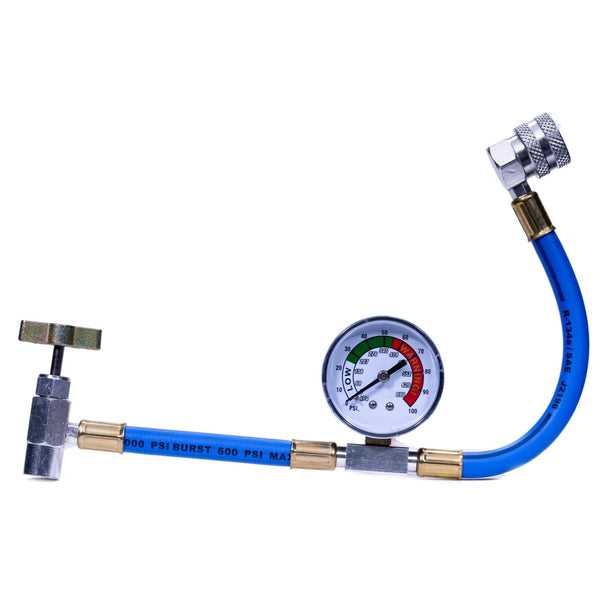
R134a Universal Charging Hose with Gauge — Resealable & Piercing Valve Cans
A universal R134a charging hose with built-in pressure gauge, compatible with both resealable valve cans and traditional piercing valve cans. The integrated gauge lets you monitor low-side system pressure while charging — a significant advantage over a hose without a gauge, as it helps you avoid overcharging and confirm the system is operating in the correct pressure range.
Specifications
- Compatible refrigerant: R134a
- Can compatibility: Resealable valve cans AND traditional piercing valve cans
- Connection: Standard R134a low-side (1/4" SAE with low-side coupler)
- Gauge: Included — monitors low-side system pressure during charging
Why the Gauge Matters
Charging by pressure rather than by can count is significantly more accurate. R134a low-side pressure is affected by ambient temperature — at 90°F ambient, correct low-side pressure is roughly 40–45 PSI at idle; at 70°F it's lower. The gauge lets you stop charging when the system is properly charged rather than guessing based on how much refrigerant you've added.
With Gauge vs. Without Gauge
- With gauge (this product) — Monitor pressure in real time; avoid overcharging; more accurate and professional result
- Without gauge — Lower cost; suitable when you have a separate gauge or just need a simple top-off hose
Frequently Asked Questions
Can this be used with R1234yf?
No. R1234yf requires a dedicated incompatible fitting. See our 1234yf charging hose.
What pressure should I charge R134a to?
Low-side pressure targets vary with ambient temperature. As a general guide: roughly 25–45 PSI low-side at idle with AC on max and blower on high, varying with ambient temp. Always refer to a vehicle-specific pressure chart for accurate targets.
Share